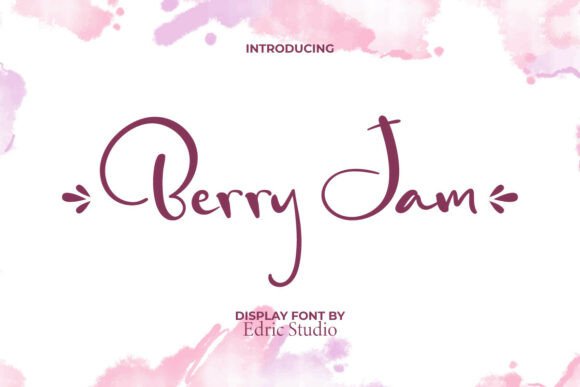
Berry Jam Font: A Delicate Script for Handcrafted Design Projects
The Berry Jam font is a handwritten script typeface that offers a soft, elegant aesthetic ideal for design projects requiring a personal touch. With its smooth monoline strokes and subtle swashes, it emulates natural handwriting while maintaining readability and visual appeal. This font is especially suited for those looking to convey warmth, authenticity, and craftsmanship in their work.
What Makes Berry Jam Unique?
Berry Jam stands out due to its delicate balance between sophistication and approachability. Unlike many decorative fonts that sacrifice legibility for style, Berry Jam maintains a clean and fluid structure. Its moderate slant and consistent stroke weight ensure it remains readable even in longer phrases, making it effective for both display and short-body text applications.
The font includes a variety of alternate characters, swashes, and ligatures, all accessible through PUA encoding. This feature simplifies the process of customizing text without requiring advanced design software, offering users flexibility and creative control.
Why Designers Choose Berry Jam
Designers often turn to Berry Jam when they need a font that feels intimate and handcrafted. Its feminine appeal and organic simplicity make it a popular choice across several design niches:
- Wedding stationery: Invitations, thank-you cards, and signage benefit from its elegant, personal feel.
- Product labeling: Particularly in food and cosmetic packaging, where authenticity and warmth are key.
- Branding: Small businesses aiming for a boutique or artisanal image find it enhances brand personality.
- Greeting cards and social media graphics: Its expressive nature adds charm and relatability to visual content.
Key Benefits of Using Berry Jam
Several advantages contribute to Berry Jam's popularity among designers and creators:
- High Readability: Despite its script nature, it remains legible in medium-length text blocks.
- Versatile Styling: The inclusion of swashes and alternates allows for customization without compromising cohesion.
- PUA Encoding: Ensures easy access to extended characters and glyphs, even for users without advanced typographic tools.
- Emotional Resonance: Mimics natural handwriting, which can create a stronger emotional connection with audiences.
Considerations and Tradeoffs
While Berry Jam offers many benefits, it's not universally applicable. Its delicate nature may not suit:
- High-contrast environments: For example, signage or digital banners with busy backgrounds where clarity is crucial.
- Long-form body text: Prolonged reading may become visually tiring due to its script style.
- Projects requiring a bold or modern aesthetic: Berry Jam leans more toward vintage or whimsical styles, which may not align with contemporary or minimalist design goals.
Additionally, while PUA encoding enhances usability, it doesn’t replace OpenType features in professional design workflows. Users requiring advanced typographic controls may find it limiting for complex or large-scale design systems.
When Berry Jam Is a Strong Fit
If your project requires a font that conveys warmth, authenticity, and a personal touch, Berry Jam is worth considering. It excels in:
- Personalized branding: Especially for small businesses, freelancers, or boutique shops looking to humanize their brand identity.
- Handmade or artisanal product packaging: Its organic look complements natural ingredients or small-batch production aesthetics.
- Event design: From baby showers to bridal events, where soft, elegant typography enhances the overall theme.
In these contexts, Berry Jam can help establish a visual tone that feels genuine and emotionally engaging.
When to Consider Alternatives
For projects that demand:
- High legibility at small sizes: Consider more structured script fonts or sans-serif options.
- Technical or formal contexts: Berry Jam’s whimsical style may not convey the necessary authority or professionalism.
- Extended use in digital interfaces: A font with optimized screen rendering may perform better in UI/UX design.
Alternatives like Great Vibes, Allura, or Homemade Apple offer similar script aesthetics with varying degrees of formality and complexity. For a more modern alternative, Montserrat or Lato can provide clean, readable options without sacrificing personality.
Practical Insights for Decision-Making
When evaluating whether Berry Jam is the right choice for your project, consider the following:
- Target audience: Does the font align with their expectations and preferences? A younger, casual audience may appreciate its charm more than a corporate or academic demographic.
- Usage context: Will it be used primarily in print or digital? Berry Jam performs well in print and high-resolution digital formats but may not render crisply on low-resolution screens.
- Brand personality: If your brand voice is warm, personable, and detail-oriented, this font supports that identity effectively.
Always test the font in your intended application before committing. Preview it in different sizes, colors, and layout contexts to ensure it meets both aesthetic and functional requirements.
Conclusion
The Berry Jam font offers a graceful, expressive option for designers seeking a handwritten script that balances elegance with readability. While it may not be suitable for every design scenario, it shines in contexts that benefit from a personal, handcrafted feel. By understanding its strengths and limitations, you can make a more informed decision about whether it aligns with your creative goals and audience expectations.